


Why Are There Marks Under My Violin Bridge? It’s Usually Not a Defect
Violin Care Guide
Noticed two faint marks under your violin's bridge? Here's why they almost always appear — and the handful of signs that mean it's time to call a violin maker.
In this article
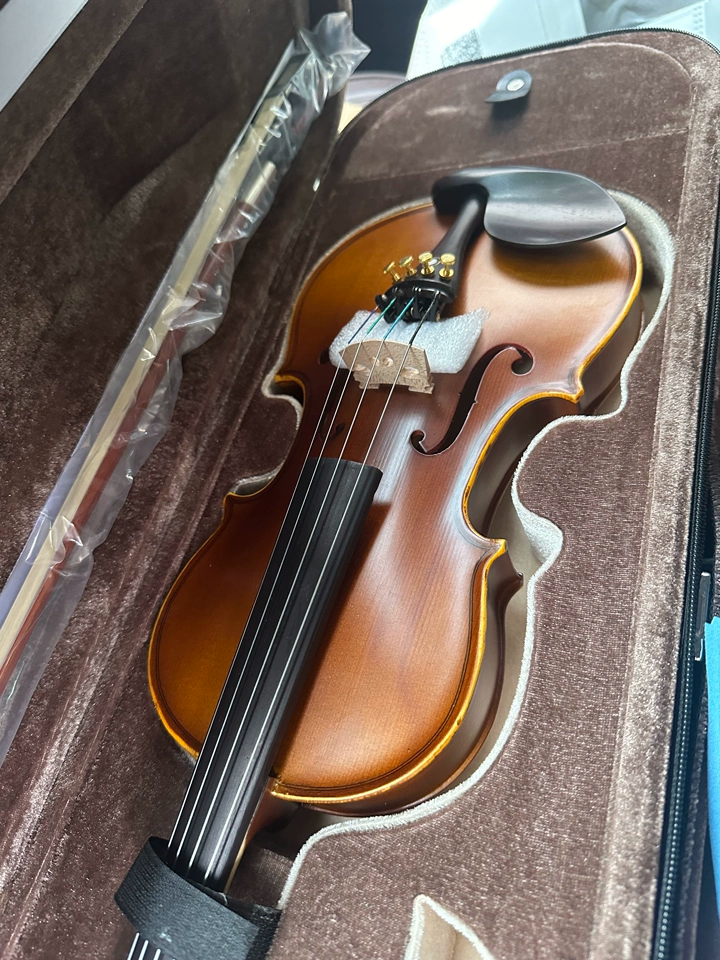
If you just unboxed a new violin and spotted two small impressions in the varnish underneath the bridge, it's natural to wonder whether something is wrong. In the vast majority of cases, the answer is no — these marks are a normal, expected result of how a violin is built and played, not a manufacturing flaw.
What Are the Marks Under the Bridge?
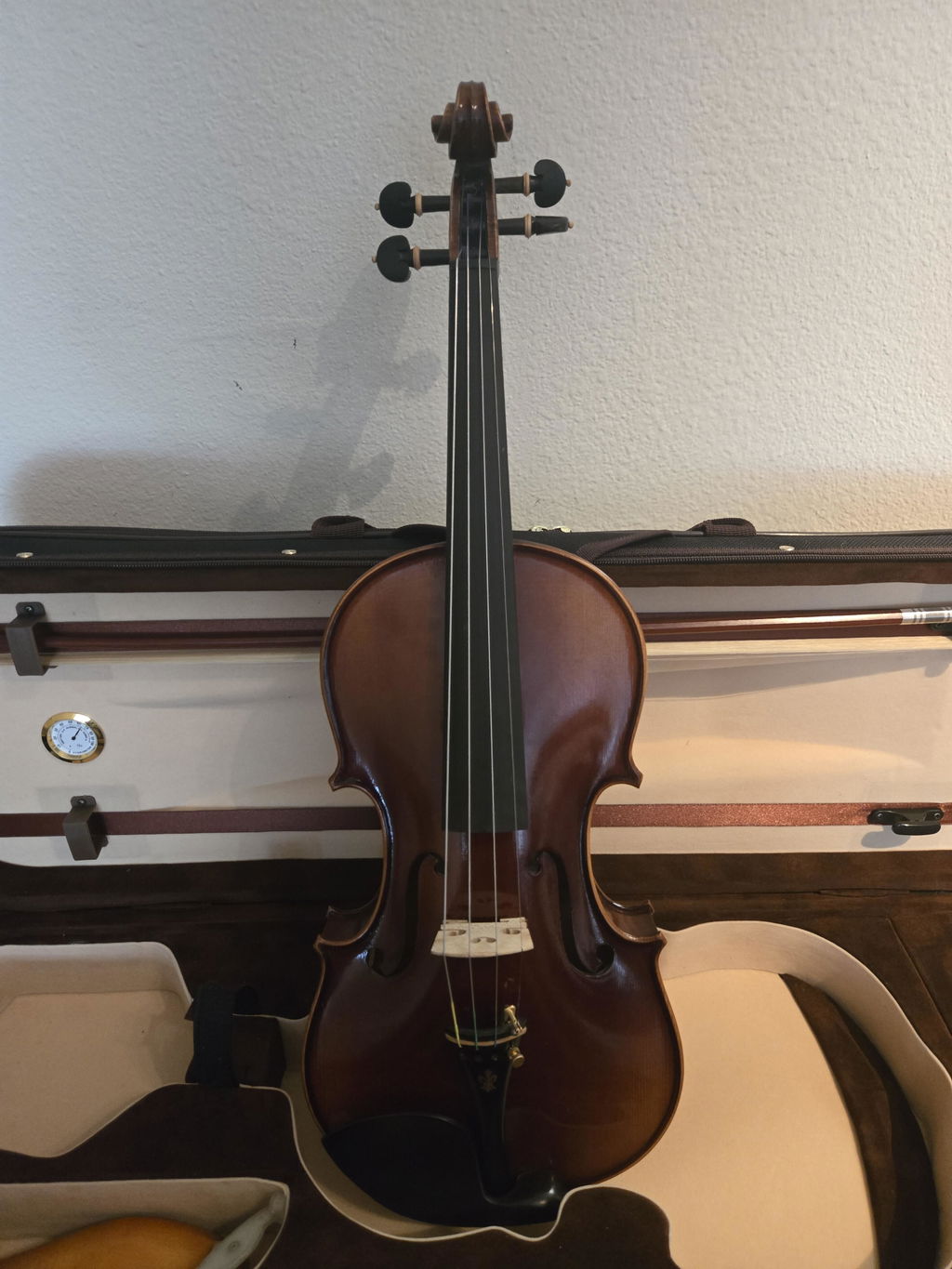
A violin bridge isn't glued to the instrument. It stands on top of the spruce table, held in place purely by the downward pressure of the four tightened strings. Because the two bridge feet stay in constant contact with the varnished surface, you'll often see:
- Two faint outlines where the feet sit
- Slight impressions in the varnish
- A subtle color difference directly under each foot
- A visible "footprint" if the bridge is ever removed
Luthiers actually rely on this footprint — it helps confirm exactly where the bridge belongs if it's ever taken off and needs to be repositioned.
Why Does the Bridge Leave an Impression?
The cause is simple: sustained pressure. At normal playing tension, the strings press down through the bridge, which then transfers that pressure — along with the strings' vibration — directly into the violin's top plate. That transfer is exactly how a violin produces sound, so some contact pressure is unavoidable and, in fact, essential. Over months or years, this constant load can leave a slight impression exactly where the two feet meet the wood.
Why Traditional Varnish Shows This More Easily
This is where a lot of new owners get the wrong idea. A violin isn't finished like furniture or a guitar with a thick synthetic coating. Most handcrafted violins use comparatively thin, traditional varnish systems designed to protect the wood and preserve its tone — not to create a hard, scratch-proof shell. Depending on the varnish formula, the instrument's age, and factors like humidity and temperature, that finish can stay somewhat flexible, which makes it more susceptible to a light bridge impression.
Good to know
A thicker, harder finish might resist marks more visibly, but violin makers don't judge varnish quality by how mark-resistant it is. A subtle bridge footprint is common on serious, high-quality instruments and says nothing about the violin's overall craftsmanship or value.
Why the Bridge Needs Full Contact
The feet of a properly fitted bridge are shaped to follow the curve of the violin's top as closely as possible. That contact isn't something to avoid — it's essential for transferring string vibration into the body efficiently. What actually matters is that the bridge is correctly fitted, properly positioned, and standing at the right angle, not whether it happens to leave a light mark.
Normal Marks vs. Actual Damage
There's a real difference between a harmless bridge footprint and genuine damage worth having checked.
Usually Normal
- Light outlines under the bridge feet
- Very shallow varnish impressions
- Slight color change under the feet
- Minor, symmetrical varnish wear
Worth Having Checked
- Deep dents in the wood itself
- Cracks extending from the bridge area
- Varnish visibly lifting or peeling
- A bridge foot digging into the top plate
- A bridge sitting unevenly, leaning, or warped
Don't DIY it
Avoid polishing, scraping, or using cleaning products on bridge marks — violin varnish is delicate and the wrong product can cause real damage. The bridge and soundpost aren't glued in place, so removing or reinstalling either without experience can throw off your violin's setup. If you're ever unsure, have a violin maker take a look.
Will the Marks Affect the Sound?
A normal, shallow footprint in the varnish generally has no impact on tone. What actually shapes the sound is whether the bridge is correctly positioned, properly fitted to the top, standing at the right angle, and paired with a well-adjusted soundpost. Proper setup matters far more than any cosmetic mark underneath it.
Signs of light use — a bridge footprint, slight wear near the chinrest, a little rosin buildup near the fingerboard — are part of what a well-played instrument looks like over time. None of it, on its own, points to poor craftsmanship.
Quick checklist before you worry
- Marks are light, shallow, and symmetrical under both feet
- No cracks radiating from the bridge area
- No varnish lifting or flaking
- The bridge sits flat and evenly against the top
- The top plate shows no dents or deformation
If every item above checks out, your violin is almost certainly fine — you're simply seeing a normal characteristic of a traditionally built string instrument.
Is it normal for a brand-new violin to already have bridge marks?
Yes. A violin is typically set up, tuned, tested, and played before it ships, so light bridge-foot marks can appear even on a new instrument. Their presence alone doesn't mean the violin is used or defective.
Does a bridge mark mean the varnish is too soft?
Not necessarily. Varnish hardness and flexibility vary by formulation. A light impression can develop from ordinary sustained pressure without indicating any problem with the varnish itself.
Do expensive violins get bridge marks too?
Yes — footprints and light varnish wear show up on instruments at every price point, including handcrafted, professional-level violins. The mark itself isn't a useful way to judge a violin's value or quality.
Should I put a pad or paper under the bridge to protect the varnish?
No. Direct, full contact between the bridge feet and the top is necessary for proper setup and sound transfer. Adding padding underneath can interfere with both.
Should I replace my bridge because it left a mark?
Not just for that. A bridge should be replaced or adjusted when there's an actual functional issue — warping, poor fit, incorrect height, damage, or misalignment — not because of a small cosmetic footprint in the varnish.
Shopping for your first violin and want one that's set up correctly from the start?
Browse Beginner Violins