


Viola Size Guide: Sizes, Dimensions, and How They Affect Tone
Unlike the violin, the viola has no single standard body size. From small instruments for children to large concert violas, size affects both comfort and tone. Here's how viola sizes work, what the numbers mean, and how to choose the right one.
In This Guide
Compared with the violin, the viola's body size is far less standardized. Sizes range from small violas for children to larger instruments for professionals, and the difference affects how comfortable the instrument is to play as well as how it sounds.
So what sizes are out there? How do they differ? And does a bigger body always mean a better tone? Understanding where viola sizes came from, and what makes each one different, will help you find the instrument that suits you.
How Viola Sizes Evolved
The viola originated in Italy in the 16th century. In its early development, two main types existed: the alto viola and the tenor viola.
Alto Viola
- Smaller body, typically around 15 to 16 inches
- Compact and easier to play
- Became the foundation of the modern viola
Tenor Viola
- Larger body, with some early instruments reaching 18 inches or more
- More internal air space, which favors low notes
- Long and heavy, with extended reaches and quicker fatigue
As instrument making advanced and composers demanded more technique and expression from players, smaller, more agile violas gradually became the standard. Large tenor violas faded from regular use, and some historical instruments were even cut down to a smaller size.
Today violas are no longer sorted into alto and tenor types. Instead, makers offer a range of sizes to suit a player's body, playing habits, and tonal preferences.
Modern Viola Sizes
Modern violas generally range from 12 to 17 inches. Sizes of 15 to 16.5 inches are the most common for adults, while 12 to 14 inch violas are made for children and smaller beginners.
Unlike the violin, which uses fractions such as 4/4, 3/4, and 1/2, violas are sized directly in inches. That measurement refers to the length of the body's back, not the total length of the instrument from scroll to tail.
| Viola Size | Approx. Body Length |
|---|---|
| 17" | 430 mm |
| 16.5" | 420 mm |
| 16" | 410 mm |
| 15.5" | 390 mm |
| 15" | 381 mm |
| 14" | 356 mm |
| 13" | 335 mm |
| 12" | 310 mm |
These are common reference sizes. Makers and brands follow different standards, so two violas with the same size label can differ slightly in actual body length.
Body length is also only part of the picture. A viola's size also includes body width, rib height, neck length, string length, and overall weight. Two 16" violas may feel and sound different because of differences in width, rib height, and string length. That's why violas are not as uniform as violins.
Construction Dimensions by Size
For those curious about the details of how a viola is built, here are reference dimensions for the assembled body, the outline, and the purfling (the black-and-white inlaid line around the edge) in four common adult sizes.
| Specification | 16.5" | 16" | 15.5" | 15" |
|---|---|---|---|---|
| Rib height, neck end | 37 | 35 | 35 | 34 |
| Rib height, tail end | 39 | 37 | 37 | 36 |
| Rib thickness | 1.4 | 1.4 | 1.3 | 1.3 |
| Edge strip width | 6 | 6 | 6 | 6 |
| Edge strip thickness | 1.3 | 1.3 | 1.2 | 1.2 |
| Upper corners width | 7.2 | 7.2 | 7 | 7 |
| Lower corners width | 7.7 | 7.7 | 7.5 | 7.5 |
| Rib-to-edge distance | 2.7 | 2.7 | 2.5 | 2.5 |
| Purfling groove width | 1.2 | 1.2 | 1.2 | 1.2 |
| Purfling distance from edge | 4.2 | 4.2 | 4.2 | 4.2 |
| Purfling groove depth | 2.5 | 2.5 | 2.5 | 2.5 |
Reference values only. Individual makers vary in their own patterns and tolerances.
What the table shows: The biggest differences between sizes are in rib height and the proportions of the outline. Purfling dimensions stay constant across all four sizes. Taller ribs mean more air volume inside the body, which is one reason rib height matters for tone as well as comfort.
Does a Bigger Viola Sound Better?
When choosing a viola, many players try to pick the largest instrument their body can comfortably handle, hoping for a fuller, deeper sound. From an acoustic standpoint, that instinct makes some sense.
Generally, a larger body holds more internal air, which helps certain low-frequency resonances develop. A well-made large viola often delivers a rich, broad low register, especially on the C string.
But a bigger body does not automatically mean a better sound. Tone also depends on the wood, the arching of the top and back, the structure, the rib height, the strings, and the maker's craftsmanship.
Can offer focus, clarity, and projection that stand out in solos and ensembles.
May have a rich low register but slower response, a less focused sound, or reduced playing flexibility.
So don't judge a viola by size alone. Consider its tone, resonance, response, projection, and how comfortable it is to play. The ideal viola balances sound quality and playability.
Children's vs. Adult Violas
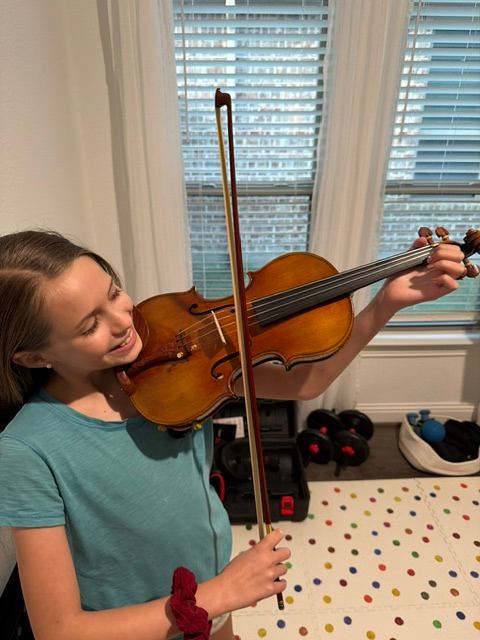
For adults, 15 to 16.5 inches is typical, and some tall players with long arms choose around 17 inches. For children, especially young beginners whose arms are still growing, a full-size adult viola is usually too big to allow good playing posture. Children typically need a smaller instrument, such as 12", 13", or 14".
Can a violin be converted into a child's viola?
In the past, small violas were hard to find, so some beginners used a converted violin as a stopgap. A violin is tuned G-D-A-E, while a viola is tuned C-G-D-A. The basic idea of the conversion is to fit viola strings so the instrument plays at viola pitch.
But it isn't as simple as swapping four strings. The bridge, nut, string tension, and other setup details may all need professional adjustment. More importantly, a violin's body is designed for a higher range, so even after conversion its low notes, especially the C string, may not resonate as well as a purpose-built viola.
Better option today: Modern makers now offer small violas built specifically for children. For a child who plans to keep learning viola, a properly sized, purpose-built instrument is generally a better choice than a violin used as a substitute.
How to Choose Your Size
Don't choose a viola by age or height alone. Arm length, hand size, coordination, and how the instrument feels in actual playing all matter. Here's what to check:
- You can hold the viola steadily with relaxed shoulders
- Your left hand can reach first position comfortably, without overextending your arm
- The string length suits you. Two violas with the same body length can have different string lengths because of neck and bridge placement
- The weight and neck thickness feel manageable, since a viola that is too large or heavy strains the shoulder, wrist, and fingers and can hold back technique
For beginners, and especially children, it's best to try violas with a teacher or professional luthier rather than choosing a bigger body just for more volume. Players with more experience can compare the tonal character of different sizes, as long as comfort comes first.
Quick Questions
What is the most common adult viola size?
Most adults play between 15 and 16.5 inches. Taller players with long arms sometimes choose instruments around 17 inches.
How is viola size measured?
By the length of the back of the body in inches, not the total length of the instrument from scroll to tail.
What size viola does a child need?
Children usually start on 12", 13", or 14" violas, depending on arm length and hand size. A teacher or luthier can help confirm the fit.
Is a bigger viola always louder or richer?
Not necessarily. Larger bodies often favor low-frequency resonance, but tone also depends on the wood, arching, rib height, setup, and craftsmanship.
Finding the Right Fit
From the large tenor violas of early Italy to today's wide range of sizes, the viola has always balanced sound against playing comfort. A larger body may bring a deeper, fuller low register, but a smaller, well-made viola can be clear, focused, and expressive too.
Choosing a viola isn't about getting the biggest body you can find. It's about finding an instrument that matches your body, your playing habits, and your musical needs.
The right size, combined with excellent craftsmanship, is the foundation of a great viola experience.