


From Baroque to Modern: Why There Is No One “Correct” Violin Bow Hold
String Technique & History
Ask ten violinists which bow grip is "correct," and you'll get ten confident, contradictory answers. The truth is that Franco-Belgian, Russian, and Galamian-style holds aren't competing fashions — they're different engineering solutions to the same problem: controlling a long lever with a handful of small muscles.
In this article
In violin pedagogy, bow hold gets flattened into a handful of labels: Russian grip, French grip, Franco-Belgian school, Galamian system. So students keep asking the same question — which one is actually the best?
But that question is built on a false premise. Looking at the history of bow design, the physics of leverage, and how the hand actually controls movement, it becomes clear that these systems didn't emerge from taste alone. No single hand shape is inherently superior. Each system is a control strategy that players developed for a particular bow, a particular sound, and particular bodies.
In other words, a bow hold isn't really a pose. It's a control system. The real question was never "where exactly should my fingers sit," but rather: how does a player use limited finger strength, wrist flexibility, and arm weight to manage an ever-evolving lever — and still produce a sound that's stable, agile, and expressive?
The Baroque Era: Whole-Arm Control on a Shorter Bow
Baroque-era bows were shorter and lighter than the modern bow, with less stick tension and a more direct, immediate response. That kind of bow didn't demand the fine-grained pressure and angle adjustments near the tip that modern playing requires.
Mechanically, a Baroque bow behaves like a short lever with low inertia. The tip sits closer to the hand, so the lever-arm effect is weaker, and the real challenge isn't stabilizing a distant tip — it's coordinating the whole arm with musical phrasing.
That's why historical paintings and early-performance practice tend to show a more open hand shape, a flatter wrist, and far less emphasis on the pinky as an independent balancing finger.
The Baroque Logic
Move the bow with the body, not with fine finger control. This wasn't "unscientific" — it was perfectly matched to shorter phrases, clear articulation, and the more intimate musical language of the period, long before Romantic-era music demanded long lines, big dynamics, and dramatic contrast.
The Modern Bow Changes Everything
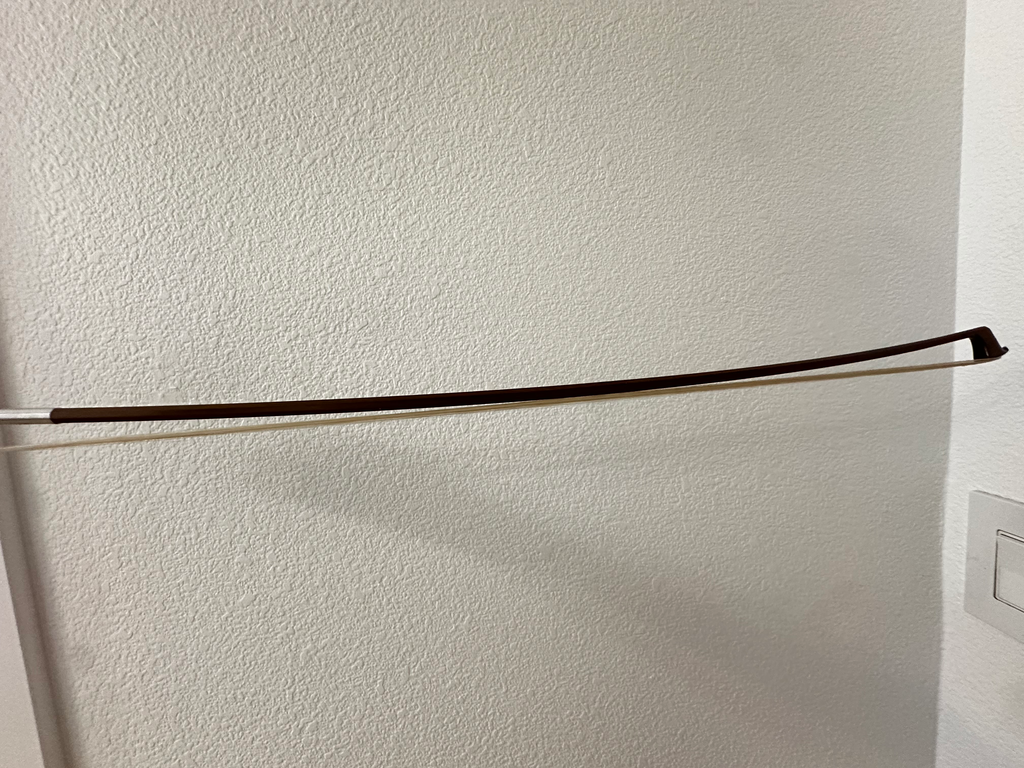
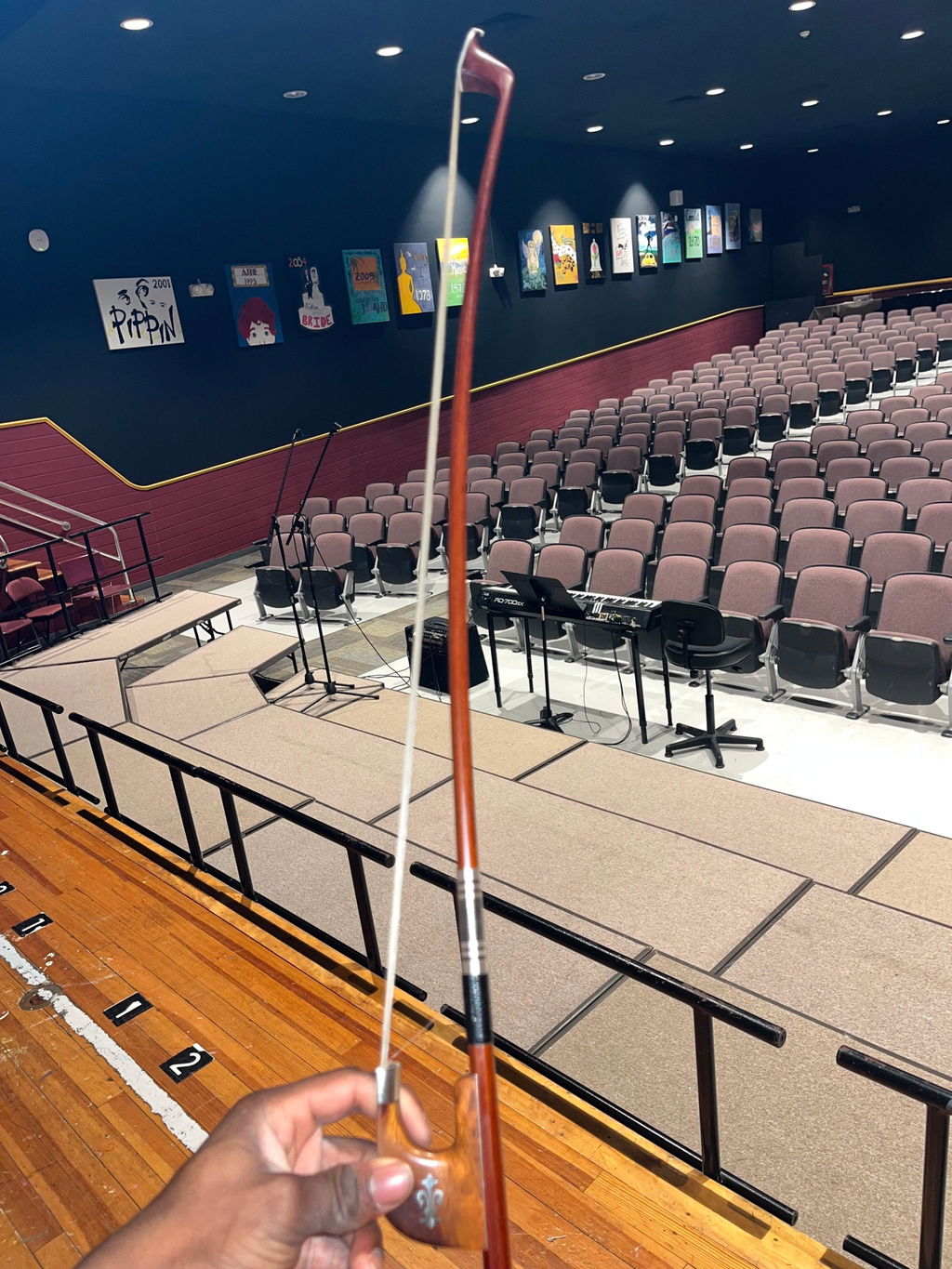
When François Tourte redesigned the bow stick in the late 18th century, the modern violin bow took shape: longer, with more stable tension and a more refined balance point. It could support bigger sound, longer slurs, a wider bowing vocabulary, and far greater dynamic range.
But that extra capability came with a cost. A longer bow puts the tip further from the hand, so a tiny angle change at the hand becomes a much larger swing at the tip. The modern bow is more powerful, and also harder to control. Players could no longer rely on whole-arm motion alone — fingers, wrist, forearm, and upper arm needed a far more precise working relationship.
That's the real reason modern bow-hold systems exist. They weren't invented to create "schools" or rivalries. They were all answering one question: how do you get stable, free sound control out of a longer, higher-tension, more expressive bow?
The Franco-Belgian Approach: Weight Over Grip
The French school — and what later became known as the Franco-Belgian system — isn't really about arranging the fingers into a pretty shape. It's about building a more natural path for weight to travel from the arm into the string.
In this approach, the fingers shouldn't clamp down on the stick, and the thumb shouldn't brace stiffly against it. Instead, the fingers rest naturally over the bow, the wrist stays springy, and arm weight flows through the palm and fingers, into the bow, and finally into the string.
The goal is to reduce sustained tension in the small muscles of the hand, letting bone structure, wrist elasticity, and arm weight do the work of producing sound.
Why It Works
Sound opens up easily, the hand resists stiffening, and it's a faster path to a relaxed feel — which is exactly why it's often the friendlier starting point for adult learners and serious hobbyists. It lowers the bar for fine motor control.
The Core Idea
Don't grip the bow. Let the bow be managed by the natural weight of the arm. It's a strategy built around ease, balance, and flow.
The Russian School: Active Control, High Stakes
The Russian bow hold gets misread all the time as "just gripping harder." That's not quite right. It's less about force and more about active control.
In the Russian approach, the index finger plays a bigger role, the forearm pronates more visibly, and the center of control shifts toward the far end of the stick. That setup gives players higher-resolution control at louder dynamics, faster bow changes, and when playing closer to the bridge.
The Payoff
- Focused, projecting sound
- Wide dynamic range
- Strong fit for intensely expressive, highly controlled repertoire
The Risk
- Index finger, thumb, and forearm muscles must all stay actively engaged
- Requires real coordination and the ability to stay relaxed under load
- Without a solid foundation, it slides into "pressing" or "gripping," leading to a stiff wrist, a tense thumb, and a choked sound
So the Russian system isn't "more force" — it's "more active." Its advanced form isn't tension, it's a high degree of control. That's also why violinists trained in the same Russian lineage can look noticeably different in hand shape and sound production. The real question was never whether a hand resembles a particular school — it's whether that player's body can actually sustain this kind of active control.
Galamian: Function Over Formula
The Galamian system is often misfiled as "a third bow hold," sitting somewhere between French and Russian. But its real contribution wasn't a brand-new fixed hand shape — it reframed bow hold from a question of school to a question of function.
In this framework, the hand shape isn't fixed. What's fixed is the role each part of the hand plays:
The Functional Roles
- The thumb is the pivot point — but a springy one, never rigid
- The index finger regulates pressure and sound direction
- The middle and ring fingers stabilize the stick
- The pinky handles balance, especially critical near the frog
- The wrist is the dynamic hinge linking fingers to arm
What makes this approach valuable is that it acknowledges every hand is different. Palm size, finger length, joint flexibility, muscle elasticity, and forearm rotation all affect what setup actually works best for a given player.
So the Galamian system doesn't ask every student to copy one shape. It asks players to find their own fine-tuned version within a shared set of control principles. In that sense, it's closer to a modern teaching philosophy: don't force the body to obey the shape — make the shape serve the function.
The Real Pattern Behind Bow Grip Evolution
Compress the whole history into a single timeline and the path is clear:
| Era / School | Core Control Strategy |
|---|---|
| Baroque | Whole-arm, whole-body movement |
| Franco-Belgian (modern bow) | Weight transfer and structural balance |
| Russian | Active control and dynamic precision |
| Galamian | Adjustable, function-based modules suited to the individual |
None of these systems is simply "better" or "worse" than the others — they're different bodily strategies for the same underlying problem. For students, the goal isn't chasing a "standard" hand shape or clinging to a school label. It's understanding the function each finger, wrist motion, and arm position plays in producing sound.
A Genuinely Good Bow Hold Meets Three Conditions
- The sound is stable
- The body stays relaxed
- The motion can flex and adapt to what the music needs
A hand that looks textbook-perfect but produces a stiff sound, a tense wrist, and fingers that can't adjust isn't actually an effective bow hold. A hand with some individual quirks that still produces a natural, stable, relaxed sound is doing exactly what it's supposed to do.
The Takeaway
Bow hold isn't a pose — it's a control system. Across history, from short bow to modern bow, from whole-body motion to fingertip precision, from weight transfer to active control to individualized fine-tuning, the goal has stayed the same: get musical intention from the body to the string as naturally and efficiently as possible. There's no single standard for bow hold. The only real standard is whether the sound is free, the body is balanced, and the control is sustainable.
Frequently Asked Questions
Is one bow hold actually better than the others?
Should beginners worry about which "school" they're being taught?
Why does my bow hold feel different from my teacher's?
Does the bow itself affect which hold works best?
Still building confidence with your bow hold? A bow with the right weight and balance for your hand makes every one of these control systems easier to feel.
Shop Violin Bows