


Franz Schubert: The Short Life and Lasting Music of the “Prince of Song”
Franz Schubert (1797–1828) lived only 31 years. He never held a grand court position and never enjoyed Beethoven's fame. Yet he left behind more than 600 songs, along with symphonies, piano works, and chamber music that still move audiences today.
In This Article
Franz Peter Schubert is one of the most important links between the Viennese Classical tradition and early Romanticism. With a remarkable gift for melody, deep emotional sensitivity, and a unique understanding of how poetry and music can work together, he opened a new chapter in 19th-century European music. In the world of German art song, known as Lieder, his achievement was so great that he is often called the "Prince of Song."
A Musical Family and a Gifted Boy
Schubert was born on January 31, 1797, in a suburb of Vienna, into a modest family. His father, Franz Theodor Schubert, was a schoolteacher who later became a school headmaster. His mother had worked as a household servant before her marriage.
Money was tight, but music was always part of home life. Schubert began lessons with his father around the age of five, then studied violin, piano, and general music. His family quickly noticed that he understood music far beyond his years.
On weekends and holidays, the family often played string quartets together. Schubert's two older brothers played first and second violin, his father played cello, and young Franz played viola.
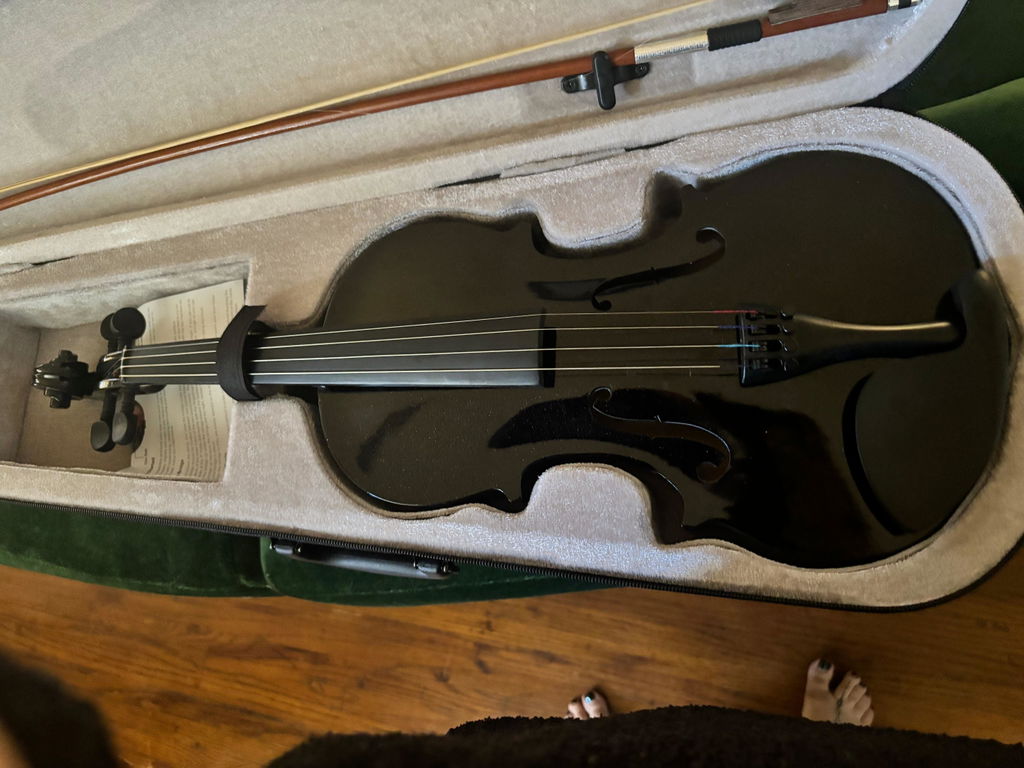
A violin-family beginning: Those living-room quartets taught Schubert how different instrument voices blend and balance. It is no accident that he later wrote some of the finest chamber music in history. His first music classroom was not a concert hall, but a home full of strings.
The Imperial Choir and a Famous Teacher
In 1808, at just 11 years old, Schubert won a place in the Vienna Imperial Court Chapel choir thanks to his beautiful singing voice. This also earned him a place at the Imperial boarding school, the Stadtkonvikt.
There he received a systematic music education, came to know works by Haydn and Mozart, and played in the student orchestra. Vienna's rich opera and concert life broadened his horizons further.
During these years, his talent caught the attention of Antonio Salieri, one of the most influential figures in Viennese music. Salieri had served the Habsburg court for decades and was a respected composition teacher. He personally guided Schubert in composition, harmony, and music theory.
Many people know Salieri from the film Amadeus, in which he appears as a jealous rival of Mozart. That portrayal comes from fiction and drama, not from the historical record. The real Salieri was a successful court musician and an outstanding teacher whose students also included Beethoven and Liszt.
Teaching by Day, Composing by Night
In 1813, at age 16, Schubert left the boarding school, trained as a teacher, and became an assistant at his father's school. The job gave him a steady income but took up time he would rather have spent composing.
It did not stop him. Alongside his teaching, he kept writing songs, symphonies, piano pieces, and chamber music. In 1814, he set a scene from Goethe's Faust in the song Gretchen am Spinnrade ("Gretchen at the Spinning Wheel"), using a restless piano accompaniment and a tender vocal line to capture a young woman's inner world.
The year 1815 was astonishing. At just 18, Schubert wrote well over a hundred songs, plus symphonies, sacred music, and stage works. That same year he composed Erlkönig ("The Erl-King"), another Goethe setting. Galloping piano figures drive the song while a single singer portrays four characters: the narrator, the father, the child, and the Erl-King himself. It shows Schubert's rare ability to turn a story into musical drama.
But the growing pile of manuscripts did not bring financial independence. Composing was what he loved most, but it could not yet pay the bills.
Leaving the Classroom, Supported by Friends
Around 1816, Schubert's life took a turning point. His friend Franz von Schober, an admirer of his talent, invited him to move in, giving him space to focus on composing. Schubert gradually stepped away from heavy teaching duties, though the change was not instant, and he returned to teaching from time to time.
Unlike many composers of the era, Schubert had no court appointment or long-term noble patron. He relied largely on the help of friends, along with income from performances and publications. His circle included poets, painters, singers, pianists, and other art lovers. They gave him housing and support, and they performed his music, spreading it through Vienna's cultural world.
One of the most important was the celebrated baritone Johann Michael Vogl, whose interpretations helped listeners understand the special power of Schubert's songs.
The birth of the "Schubertiade": As his music grew more popular among friends, private gatherings formed around his works. These evenings became known as Schubertiaden. Friends gathered to hear new songs, piano pieces, and chamber music, and to talk about literature and art. The name is still used today for concerts celebrating Schubert's music around the world.
This warm, intimate way of sharing music matched his own style: tender, delicate, and deeply poetic.
Known in Life, Celebrated Too Late
For a long time, Schubert was pictured as a poor, unknown genius who was recognized only after his death. The real story is more complicated.
During his lifetime, his songs were performed and published, and his friends promoted his work in Vienna. Some pieces were popular with the public. But compared with Beethoven, Schubert never had a stable professional position. Many of his instrumental works were not fully performed in his lifetime, and some important pieces were not rediscovered until years after his death.
Schubert was also not a natural self-promoter. He preferred to express himself through his music and share it within a circle of people he knew.
On March 26, 1828, he finally gave a public concert made up entirely of his own works, the only one of his life. It was warmly received and was a financial success, a rare moment of recognition for a composer who had worked so long without it. Sadly, fate gave him very little time left.
Dying at 31, Resting Beside Beethoven
Schubert had deep admiration for Beethoven. When Beethoven died in Vienna in March 1827, Schubert attended the funeral and walked in the procession as a torchbearer. Nobody could have guessed that he would follow Beethoven in less than two years.
Even as his health declined in 1828, Schubert kept composing. That year he produced his last three piano sonatas and the String Quintet in C major, works of remarkable depth and maturity that leave listeners wondering what he might have written had he lived longer.
Schubert died in Vienna on November 19, 1828, at the age of 31. As he had wished, he was buried in the Währing cemetery, close to Beethoven. In 1888, both composers were moved to honorary graves in Vienna's Central Cemetery, where they remain a place of pilgrimage for classical music lovers from around the world.
The Music He Left the World
Schubert's life was short, but his output was enormous: songs, symphonies, operas, sacred music, piano solos, piano duets, and chamber music of all kinds. Because some manuscripts survive only in fragments and some works were left unfinished, catalogues differ slightly on the exact count, but there is no doubt that he was one of the most productive and inventive composers in history.
Erlkönig, Die Forelle (The Trout), Heidenröslein, Ave Maria, and Serenade remain concert and teaching favorites.
Die schöne Müllerin and Winterreise, both set to poems by Wilhelm Müller, trace love, loneliness, hope, and loss.
The Trout Piano Quintet and the Death and the Maiden String Quartet show his lyrical and dramatic sides.
Erlkönig is famous for its sharp dramatic tension, The Trout for its playful, lively imagery, and the Serenade for a gentle melody that has touched countless listeners. Winterreise, with its deep psychological insight and expressive piano writing, is widely regarded as the summit of German art song.
Schubert was not only a master of song but also a great chamber music composer. The Trout Quintet is light, bright, and full of singing lines, while Death and the Maiden reveals the intense contrasts and depth of his darker side. From playing in the family quartet as a boy to writing profound chamber works late in life, strings remained a vital part of his musical world.
For violin lovers: Schubert's Ave Maria has a special place in violin history. It was this piece that first awakened Shinichi Suzuki's love of music, the moment that eventually led to the Suzuki Method.
Bridge Between Classical and Romantic
In Western music history, Haydn, Mozart, and Beethoven are considered the central figures of the Viennese Classical school, a tradition built on structure, form, balance, and logical development. Schubert grew up in that tradition, and the influence of Haydn and Mozart is clear in his early symphonies and chamber works.
As he matured, however, he developed his own voice. Where Classical music prized form and structure, Schubert emphasized singing melody, subtle shifts of emotion, and poetic expression. His music could paint spring streams, forest nights, the sweetness of love, the pain of lost hope, or the loneliness of facing fate alone. That focus on inner life, literary imagery, and personal feeling is a defining mark of Romantic music.
His most influential contribution was raising the German art song to unprecedented heights. Songs existed before Schubert, and Haydn, Mozart, and Beethoven all wrote them. But Schubert gave the form richer harmony, deeper psychological portraits, and a much closer relationship between poem and piano. In his hands the piano was no longer a simple accompanist. It shared with the voice the work of telling stories, painting scenes, and expressing feelings.
That approach deeply influenced Schumann, Brahms, Wolf, and others, and helped drive the flowering of art song throughout the 19th century.
Short Life, Lasting Melodies
Schubert's life had no political power and little worldly glory. He taught school to make a living, relied on friends to keep composing, and longed for recognition from the music world. Only in the last year of his life did he hold a concert devoted entirely to his own works.
Yet from a life full of disappointments came countless unforgettable melodies. Whether it is the lightness of The Trout, the tenderness of the Serenade, or the heartbreaking loneliness of Winterreise, Schubert's music carries a timeless power. In just 31 years, he showed that the value of art is not measured by the length of a life, but by how much true and deep feeling it leaves behind.
Two centuries on, Schubert's life has long since ended, but his melodies still echo in concert halls around the world.