


The Complete Guide to Mastering Violin Intonation: Everything You Need to Know
Playing the violin in tune is one of the most challenging yet essential skills for any violinist. Whether you're a beginner or an experienced player, achieving perfect intonation requires dedication, proper technique, and the right training methods. This comprehensive guide will walk you through proven techniques to improve your violin intonation and play with confidence.
Why Intonation is the Soul of Violin Playing
Intonation is often called the "soul" and "life" of violin performance. Unlike instruments with fixed pitches, the violin requires players to find every note themselves on the fingerboard—only the four open strings have predetermined pitches. This makes intonation one of the most fundamental yet difficult aspects of violin technique.
Poor intonation makes playing uncomfortable and frustrating, not just for the performer but also for listeners. Without accurate pitch, even the most expressive playing loses its impact. That's why developing good intonation should be every violinist's top priority.
1. Scale Practice: The Foundation of Accurate Intonation
Why Scales Matter
Daily scale practice is the cornerstone of developing accurate intonation. While many violin enthusiasts and beginners prefer practicing beautiful melodies over "boring" scales, consistent scale work is the most direct and effective method for establishing precise pitch recognition.
As the legendary violinist Jascha Heifetz stated: "The foundation of violin technique is scales—they are the most important aspect of violin playing." Scales appear throughout violin repertoire, from brilliant fast passages to challenging cadenzas, making them essential building blocks for all violin music.
Benefits of Scale Practice
- Establishes mental pitch reference: Builds an internal map of correct pitch positions
- Develops hand frame: Creates muscle memory for finger placement and spacing
- Improves finger sensitivity: Enhances tactile awareness on the fingerboard
- Prepares for repertoire: Most virtuosic passages are variations of scale patterns
How to Practice Scales Effectively
Step 1: Identify the Key Before playing any scale, clearly identify which key you're practicing. The starting note must be extremely accurate, or every subsequent note will be off.
Step 2: Use Open String References As you play through the scale, compare notes that match your open strings. For example, when playing a G major scale, check your high G against the open G string. If there's a noticeable difference, your intonation has drifted.
Step 3: Listen Actively Your ears must constantly monitor your fingers. Besides matching open strings, use harmonic relationships (perfect fifths, major thirds, and sixths) to verify other notes in the scale.
Step 4: Build Your Framework By ensuring all notes that correspond to open strings are perfectly in tune, you create a reliable framework for your entire scale. This prevents the common problem of ending a scale significantly sharp or flat from where you started.
Remember: Repeating a mistake 100 times doesn't make it correct. Your ears must supervise your hands every step of the way.
2. Training Your Ear to Guide Your Intonation
The Root Cause of Intonation Problems
For students with normal hearing, poor intonation usually stems from not carefully listening to the notes they produce. When incorrect pitches aren't identified and corrected during practice, the ear becomes accustomed to out-of-tune playing. Over time, players may even believe their incorrect notes are accurate, perpetuating the problem.

Develop Active Listening Habits
Daily Practice Routine:
- Check every note's pitch as you play
- Immediately correct any note that sounds off
- Don't let incorrect notes pass without adjustment
- Compare uncertain notes repeatedly until accurate
The More You Correct, The Better You'll Play Research shows that the more diligently you correct intonation during practice, the more accurately you'll play in performance. Don't assume your first finger placement is correct—be willing to adjust and search for the most accurate position.
Building Acute Hearing Skills
Practice Comparison Technique:
- Play the questionable note
- Compare it to a reference (open string, piano, tuner)
- Adjust your finger position
- Repeat until perfect
This process not only corrects pitch but also develops the finger sensitivity needed to place notes accurately on the first attempt. Sharp hearing leads to faster corrections, creating a positive cycle of improvement.
For Students with Less Sensitive Ears: Consider working with an ear training specialist or taking aural skills classes. Dedicated listening exercises can significantly improve pitch recognition abilities. Remember: just as pilots need sharp vision, violinists need acute hearing.
3. Establishing Correct Left Hand Position
Why Hand Position Matters
Beyond using your ears, maintaining proper left hand position is crucial for quick and accurate intonation. Renowned violin pedagogue Ivan Galamian emphasized that "good intonation is primarily based on tactile finger sensation guided by the ear."
Galamian's Two Essential Principles
The Hand Frame Concept:
- In any position, maintain a consistent perfect fourth interval between your first and fourth fingers
- For double stops, maintain a perfect octave between first and fourth fingers
- This framework helps you find accurate placement for your second and third fingers
The Double Contact Principle:
In Lower Positions:
- Thumb lightly touches one side of the neck
- Index finger side lightly touches the other side of the neck
- Both contacts remain relaxed, never gripping
In Higher Positions (Fourth Position and Above):
- Index finger side leaves the neck
- Thumb and hand contact the violin body
- Always maintain two points of contact with the instrument
Critical Reminder: Keep your thumb and hand completely relaxed during these contacts. Never squeeze or "strangle" the violin neck. The contacts are reference points, not gripping points.
4. The Importance of Ear Training (Solfège)
Understanding Inner Musical Hearing
Many violinists struggle with intonation because they haven't developed "inner musical hearing"—the ability to mentally hear and imagine pitches before playing them. According to music dictionaries, this is "the mental recall or imagination of music, whether previously heard or not, formed through rich listening experience."
The good news? Inner musical hearing can be developed through progressive training. Some key approaches:
Training Methods:
- Sing First, Play Second: Under your teacher's guidance, sing passages until they're perfectly in tune before attempting them on the violin
- Basic Exercises: Practice singing scales, arpeggios, and simple melodies to sharpen pitch discrimination
- Consistent Practice: Regular ear training makes your hearing increasingly sensitive and reliable
5. Comprehensive Training Methods for Better Intonation
Method 1: Extensive Ear Training
To play in tune, you must first hear in tune. For those without prior musical training, developing pitch discrimination takes time and effort.
Training Approach:
- Sing your practice pieces repeatedly until perfectly in tune before playing them
- Practice hearing and singing scales, arpeggios, and simple melodies
- Gradually build increasingly sensitive pitch awareness
Method 2: Develop Correct Left Hand Shape
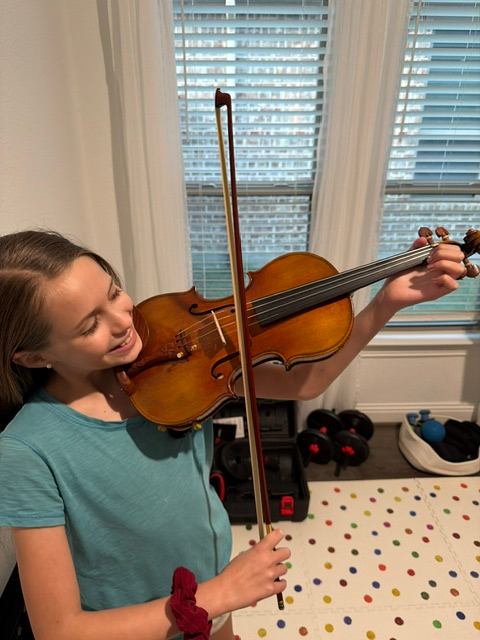
Violin requires a specific left hand position that may feel unnatural at first, unlike many other instruments.
Key Hand Position Elements:
Arm and Wrist:
- Elbow and wrist rotate inward (this feels unusual but is necessary)
- Maintain flexibility and avoid tension
Finger Shape:
- Fingers form a natural curved shape
- First and fourth fingers maintain a perfect fourth relationship at all times
- All fingers hover at approximately the same low height when not pressing
- Fingernails should align roughly in a line facing toward you
Finger Spacing:
- Half steps: Fingers must be adjacent (touching)
- Whole steps: Fingers separate (approximately the distance of two half steps)
- Constantly adjust spacing based on the intervals required
Method 3: Left Hand Action Training
Accurate intonation depends on precise, agile left hand movements.
Practice Guidelines for Beginners:
Mental and Physical Coordination:
- When practicing scales or arpeggios, engage both hand and mind
- Compare each note you play to the pitch you sang mentally
- Adjust finger position immediately based on any pitch difference
Develop Anticipation:
- Prepare finger placement in advance
- Predict the distance to the next note
- Minimize pitch errors through preparation
Advanced Finger Techniques:
- Some fingers press down early
- Some fingers lift early
- Many situations require keeping fingers down (retention)
- First finger position is critical in all positions (affects all other fingers)
Key Takeaways: The Secrets to Perfect Intonation
1. Recognize Intonation's Critical Role
Intonation is the soul and life of violin playing—an eternal challenge that accompanies every stage of learning. It's simultaneously the most basic and most difficult technical element to master.
2. Understand Why Intonation is Challenging
Objective Factors: The violin is inherently difficult to play in tune, with only four fixed open strings and all other pitches requiring precise finger placement.
Subjective Factors: Many players haven't learned scientific methods for achieving good intonation.
With proper effort and systematic training, playing in tune is absolutely achievable.
3. Apply the Five Essential Elements
A. Practice Scales Daily - The foundation of stable intonation
B. Use Your Ears to Guide Your Playing - Active listening and immediate correction
C. Maintain Proper Left Hand Position - The "hand frame" and "double contact" principles
D. Prioritize Ear Training - Develop inner musical hearing through solfège
E. Master Correct Vibrato - The key to expressive and in-tune playing
Conclusion
Mastering violin intonation is a journey that requires patience, dedication, and the right approach. By incorporating daily scale practice, developing active listening habits, maintaining proper technique, and engaging in consistent ear training, you'll build the foundation for beautiful, in-tune violin playing.
Remember: your ears are your most important tool. Just as a pilot depends on clear vision, a violinist depends on acute hearing. With systematic practice and attention to these principles, you can transform your intonation and unlock the true beauty of the violin.
Looking for quality violins and accessories to support your musical journey? Visit Fiddlover Violin Shop for expertly crafted instruments and professional guidance.