


Renowned Musicians' Perspectives on the Differences Between Stradivari and Guarneri Violins
Originally published: 2024 | Last updated: March 2026
Most violin players have heard of two legendary names: Stradivari and Guarneri. These two masters represent the highest level of violin making in history—and their instruments are still considered unmatched today.
But what exactly is the difference between a Stradivarius and a Guarneri violin? And which one is better?
Who Were Stradivari and Guarneri?
Antonio Stradivari (hereafter referred to as Strad) and Giuseppe Guarneri del Gesù (hereafter referred to as Guarneri) are undoubtedly two of the greatest violin makers in history. It seems that the master violinists who favor their violins are roughly split between the two.
In the past century, perhaps more musicians preferred Guarneri’s violins, while today, more soloists tend to use Strad’s violins. This might be why the increasingly rare Guarneri violins are becoming more expensive.
In terms of craftsmanship and overall acoustic quality, Strad's violins are considered supreme and unparalleled. However, purely from a sound perspective, many people believe Guarneri’s violins are just as good, if not better. It is inappropriate to definitively rank Strad’s and Guarneri’s violins. This is akin to deciding whether Bach or Mozart was more talented. Each has a unique style and tonal quality.

Guarneri’s and Strad’s Violins Differ Significantly in Their Construction
Guarneri’s violins are short and wide, while Strad’s are longer and narrower (except for his early violins). In terms of lines, Strad’s violins blend curves into straight lines, making them more precise and orderly. In contrast, Guarneri’s violins have predominantly curved lines, exuding a relaxed, free-flowing elegance, with a touch of artistic flair. Strad’s violins have slightly thinner plates and a thinner, more transparent varnish. Guarneri’s violins have slightly thicker plates and a thicker, darker varnish. These differing construction philosophies result in distinct tonal characteristics. The specific differences are as follows:
Key Differences in Violin Construction
One of the main differences between Stradivari and Guarneri violins lies in their physical construction.
Stradivari Violins
- Longer and more refined body shape
- More precise, symmetrical design
- Thinner plates
- Lighter, more transparent varnish
Guarneri Violins
- Slightly shorter and wider body
- More irregular, expressive craftsmanship
- Thicker plates
- Darker, heavier varnish
These differences in construction directly influence how each violin sounds and responds to the player.
Sound Differences: Stradivarius vs Guarneri
The most discussed topic in the Stradivari vs Guarneri debate is sound.
Stradivarius Sound
- Bright and clear
- Highly responsive
- Smooth and refined
- Strong projection in large concert halls
👉 Often compared to a soprano voice
Guarneri Sound
- Darker and deeper
- Powerful and bold
- Rich in lower frequencies
- More raw and expressive
👉 Often compared to a tenor voice
Professional Violinist's Review
Violin master Yehudi Menuhin commented that Guarneri’s violins produce a deep sound that emanates from each wood cell, reminiscent of the fiery red stained glass in a church. Those with an outgoing personality and a natural emotional expressiveness are particularly drawn to this sound. Conversely, Strad’s violins tolerate no rough or casual playing. Stradivari handled his materials with the same meticulous care as Michelangelo did with his sculptures. Renowned Chinese violinist Lin Cho-Liang described the difference between the two: playing a Strad is like driving a Rolls-Royce, feeling luxurious and dignified; playing a Guarneri is like driving a Ferrari, with boundless power and wild excitement.
Ruggiero Ricci, who has played numerous famous violins, stated that Strad’s violins are more suited to classical concert music, such as works by Bach, Beethoven, and Mozart. Guarneri’s violins, on the other hand, are better for Romantic and modern music, as well as pieces by Paganini. Strad’s violins resemble a noblewoman, requiring flowers and dinner to approach her; Guarneri’s violins demand an aggressive approach, needing to be driven, with inherent explosiveness and aggression. Despite their common sound quality, Strad’s and Guarneri’s violins each have unique styles. The player’s technique and style are also crucial factors. Some musicians achieve a better sound with a Strad, while others prefer a Guarneri. For example, Nathan Milstein favored the sound of Strad’s violins, feeling that Guarneri’s violins produced a nasal tone, while Pinchas Zukerman believed Strad’s violins lacked the depth of Guarneri’s.
Overall, Strad’s violins produce a soprano-like sound, while Guarneri’s produce a tenor-like sound. Strad’s violins are more rounded in the high registers and more reserved in the low registers, whereas Guarneri’s violins have more edge in the high registers and more depth in the low registers. Strad’s violins tend to be brighter, and Guarneri’s tend to be darker. However, both masters made violins with a darker sound in their later years. One could say that Strad’s later violins somewhat resemble Guarneri’s, and Guarneri’s earlier violins have some tendencies of Strad’s, despite size variations throughout their careers. In terms of playing, Strad’s violins require good bow control, avoiding excessive pressure, like a woman needing gentle care. Guarneri’s violins require more force, using the player’s deepest emotions to resonate with the violin’s strings, fully unleashing its power. Guarneri’s violins require the bow to be closer to the bridge, while Strad’s do the opposite. For string choices, Guarneri’s violins can use thicker strings, while Strad’s are better suited to neutral strings.
When playing the works of these two masters, the different feelings are like divine assistance or magic, hard to describe in words. If you can use your talent to master a violin made by either Strad or Guarneri, you can create a wonderful sound that will be unforgettable for a lifetime.
Stradivari Model Violins: From Beginner to Intermediate Level
While original Stradivari violins are extremely rare and used by world-class professionals, the Stradivari design continues to inspire many modern instruments today.
These Strad model violins are widely valued for their balanced tone, clear response, and comfortable playability, making them an ideal choice for beginners.
However, not all Strad-style violins are the same. As players improve, they often look for instruments based on the same Stradivari design but with higher craftsmanship, better materials, and more refined acoustic performance.
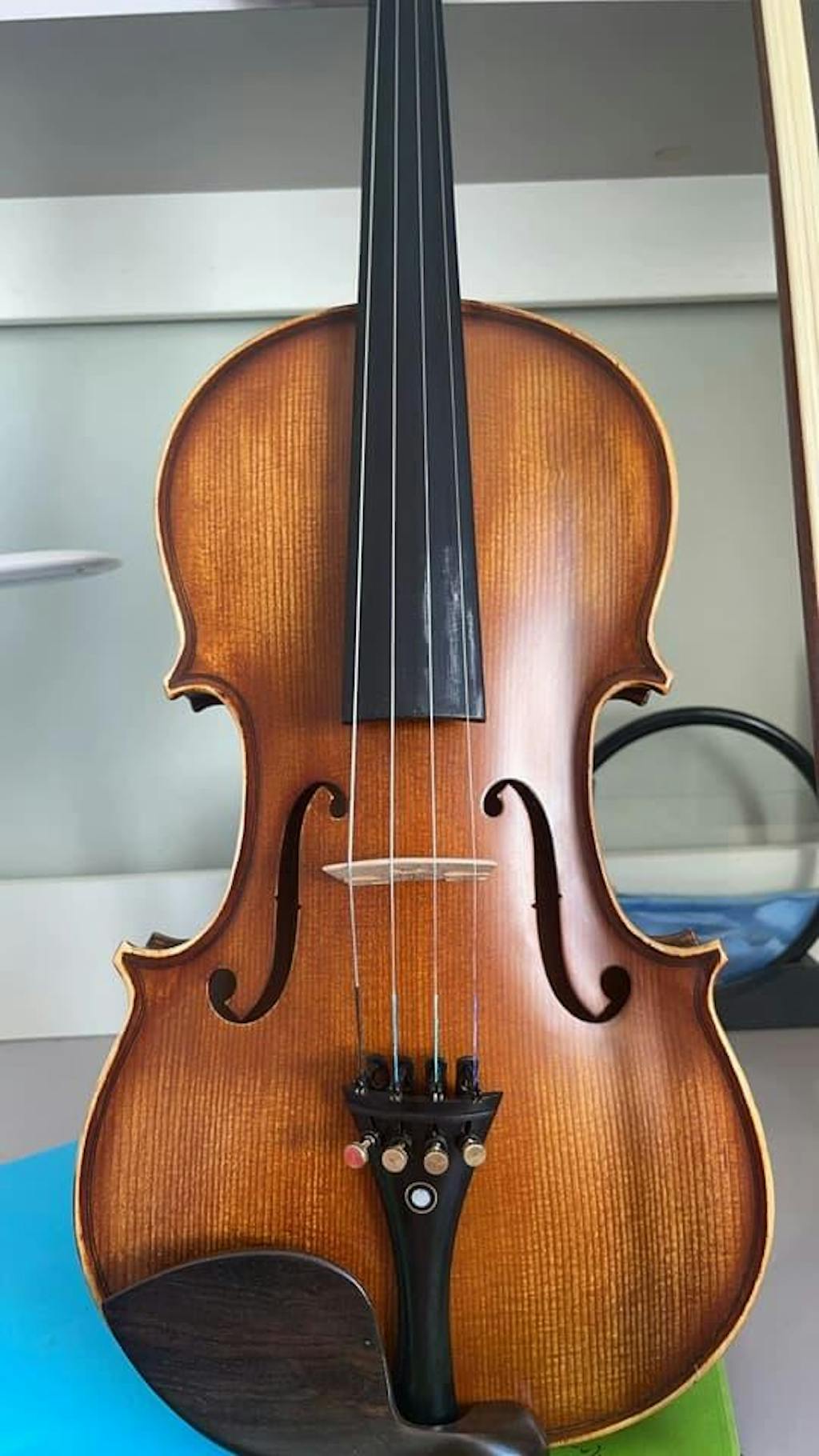
This is where intermediate-level instruments become important. They maintain the classic Stradivari 1716-style design while offering improved resonance, stronger projection, and greater tonal depth compared to entry-level models.
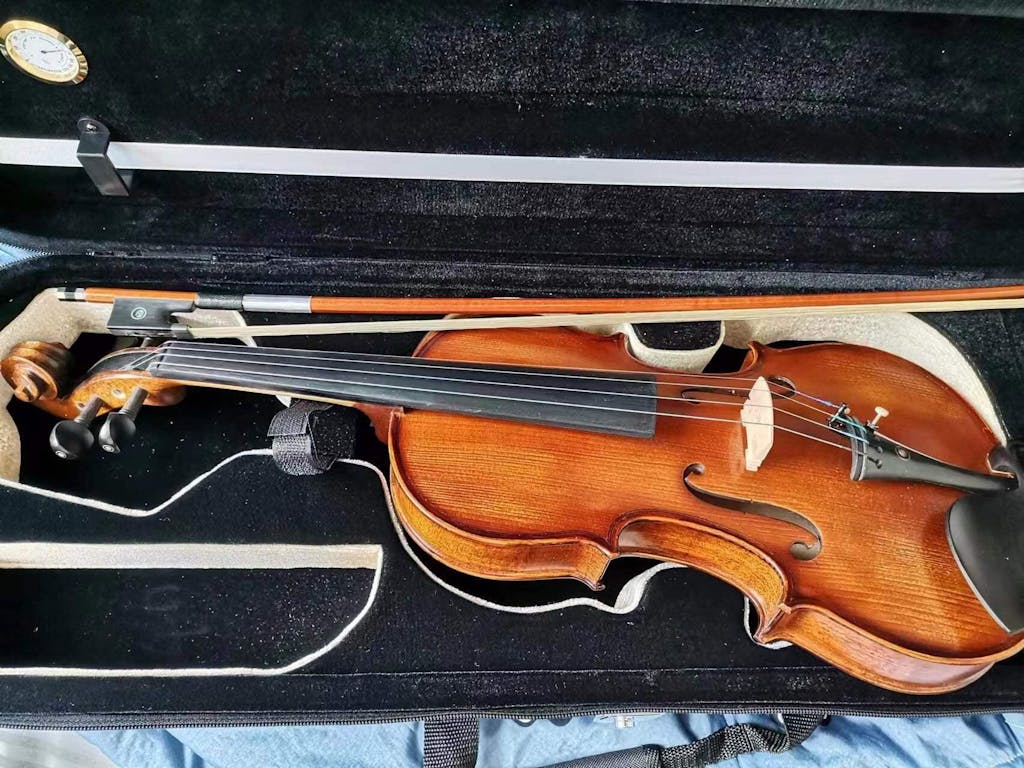
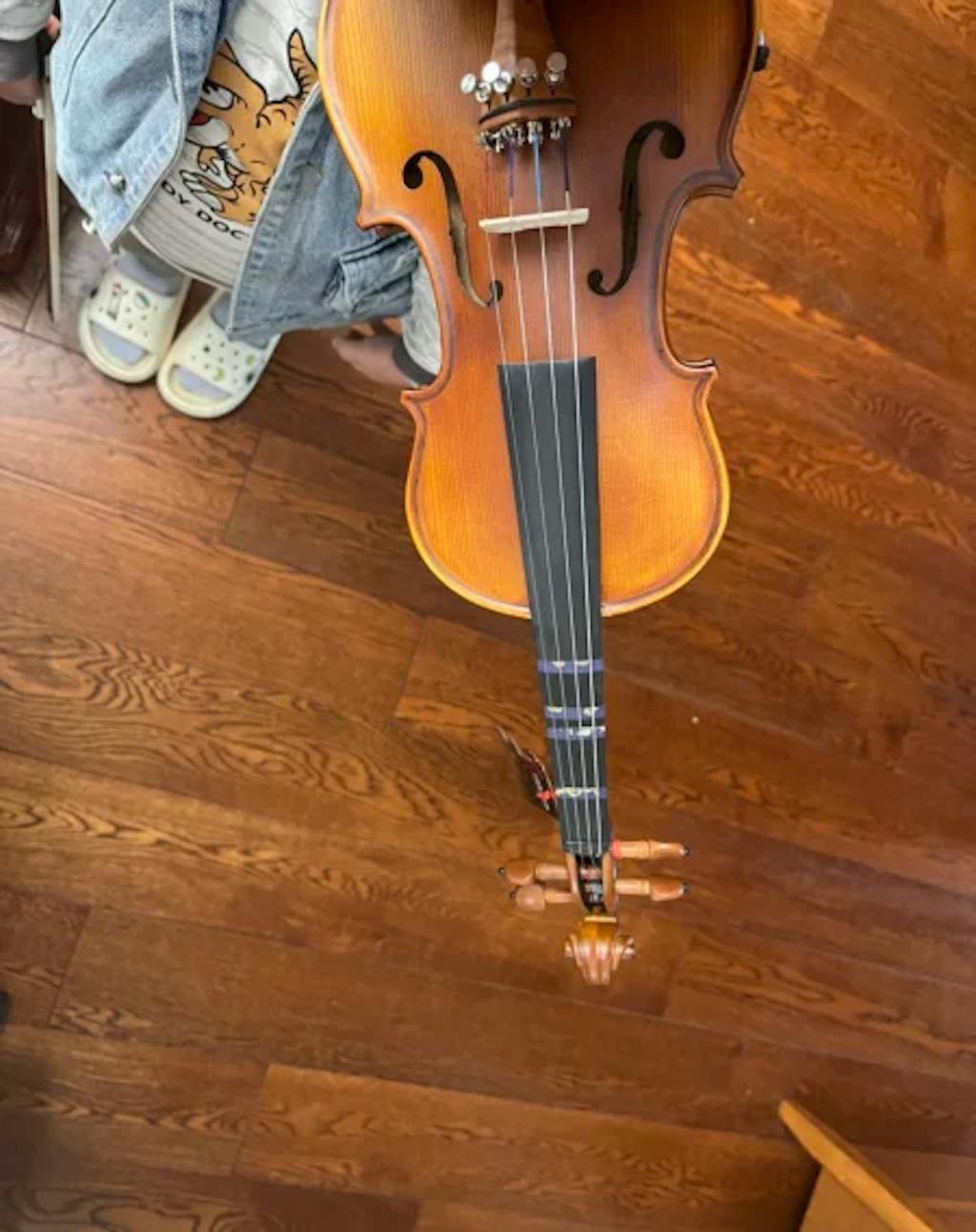
👉 For players ready to move beyond beginner instruments, our Q006 Stradivari 1716 model intermediate violin offers enhanced sound quality, better responsiveness, and a more mature tonal character while still following the traditional Stradivari design principles.